


Transform your landscape with our expert tree and lighting services. Our skilled team creates captivating outdoor spaces that radiate beauty and invite enjoyment.
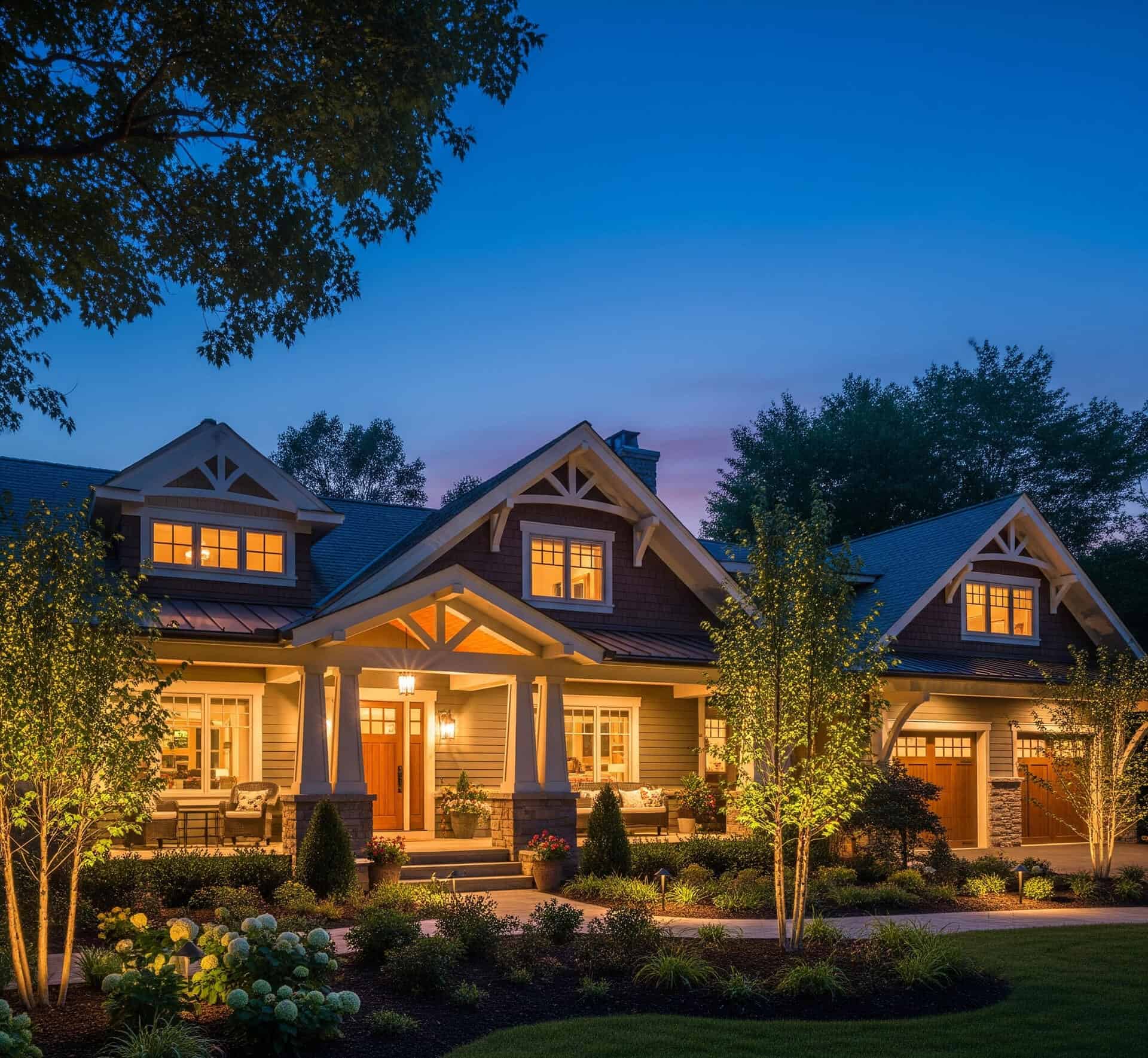
There's a specific moment that a lot of homeowners describe when they talk about why they finally decided to upgrade from their DIY landscape lighting to a professional installation. They're standing in their yard at night, looking at the system they put together themselves over the past few years — the path lights that are partially buried and pointing in different directions, the uplights that looked great in the store but produce a yellowish, inconsistent glow after two summers, the transformer that hums and occasionally trips — and they think: this is not what I was imagining when I started this.
DIY landscape lighting has real appeal. The upfront cost is lower. The process feels satisfying. And modern consumer-grade outdoor lighting products have gotten good enough that a DIY system can look decent on the day it's installed. But over time, the limitations of DIY landscape lighting become harder to ignore — and more expensive to work around.
If you've been thinking about upgrading from a DIY system to professional landscape lighting, this guide is for you.
Why DIY Landscape Lighting Underperforms Over Time
The core problem with DIY landscape lighting isn't the installation — it's the materials. Consumer-grade outdoor lighting fixtures and components are designed to meet a price point, not to perform in real outdoor conditions indefinitely. Here's what that looks like in practice:
Consumer-grade LED bulbs lose brightness and color accuracy faster than commercial-grade equivalents. After one or two DFW summers, the warm white uplights you installed may be producing a noticeably different light than when they were new — dimmer, yellower, and less consistent across fixtures.
Consumer-grade fixture housings are more susceptible to UV degradation, moisture infiltration, and physical damage than commercial-grade versions. Plastic components crack. Seals fail. Lenses cloud over. The fixtures that looked clean and professional on day one often look weathered and worn within a few years of North Texas outdoor exposure.
Consumer-grade wire and connectors corrode faster in outdoor conditions and are more susceptible to damage from lawn maintenance activity. A DIY landscape lighting system that was working fine in year one often has section failures and intermittent issues by year three or four — the result of wire damage and connector corrosion that accumulates gradually.
The Design Limitations of DIY Landscape Lighting
Beyond the material quality issue, most DIY landscape lighting systems also have a design problem. Not because the homeowner lacked taste or creativity — but because designing outdoor lighting effectively is a specific skill that takes experience and a trained eye to do well.
DIY landscape lighting designs tend to share a few common patterns: fixtures placed too close to trees and shrubs so they light the base rather than the form, path lights spaced inconsistently so the visual rhythm feels choppy, uplights aimed at angles that create flat rather than dimensional illumination, and an overall composition that feels like individual elements rather than a unified design.
Professional landscape lighting design takes a different approach. Every fixture is placed with specific intent — the right distance, the right angle, the right aim — to create the exact effect that makes the plant, the tree, or the architectural feature look its best. The overall composition is thought through as a whole, with every element contributing to a unified result that feels designed rather than assembled.
What the Upgrade to Professional Landscape Lighting Delivers
Homeowners who make the switch from DIY to professional landscape lighting consistently describe the experience in similar terms: they didn't realize how much better it could look until they saw it.
The materials difference is immediately visible. Commercial-grade fixtures produce brighter, more consistent light. The color temperature is accurate and stays accurate. The housings look clean and will continue to look clean. The wire runs are buried properly and protected. The transformer is correctly sized and will handle the system's load without issue.
The design difference is equally significant. Trees that were lit from the wrong angle suddenly look three-dimensional. Path lights that were scattered now have a visual rhythm that makes the approach to the home feel designed. The overall composition has the kind of depth and layering that makes a landscape lighting installation look professional — because it is.
How the Upgrade Process Works
Upgrading from a DIY system to professional landscape lighting doesn't necessarily mean starting completely from scratch. At Texas Smart Lights, we assess existing systems and work with homeowners to understand what's worth keeping, what needs to be replaced, and what the design needs to achieve a professional result.
In many cases, the wire infrastructure from a DIY system can be reused — what changes is the fixtures, the transformer, and the design. In other cases, a complete reinstall is the right approach, particularly when wire runs have been damaged or the existing layout doesn't support the design improvements the homeowner is looking for.
Either way, the process starts with a free consultation and a nighttime assessment of the existing system — so we can give you an honest evaluation of what you have, what it would take to make it right, and what the professional result would look like.

At Texas Smart Lights, we do landscape lighting upgrade projects throughout the DFW Metroplex — replacing underperforming DIY systems with professional installations that deliver the results homeowners originally imagined. We're a family-owned company, and we take the same pride in upgrade projects as we do in new installations.
If your current landscape lighting isn't delivering what you were hoping for, we'd love to show you what it could look like.
Schedule your free upgrade consultation today at txsmartlights.com.
Transform your landscape with our expert tree and lighting services. Our skilled team creates captivating outdoor spaces that radiate beauty and invite enjoyment.